


How to cool a house effectively without air conditioning thanks to glazing?
In France, summer comfort is a real issue. Of the 30 million main residences in the country, more than half have an EPC rating between D and G. * That means nearly half of the French population lives in homes that are poorly insulated against heat.
Poor air circulation, nonexistent or insufficient wall and roof insulation, non-passive materials… the causes may vary but they all lead to the same problem: the house turns into an oven in summer, impossible to cool down even at night. So, the quick fix is often air conditioning.
Yet, we know that air conditioning is far from being the best solution. Glazing, among other elements, has a real role to play in a home’s thermal comfort.
Why look for alternatives to air conditioning?
Due to recurring heatwaves year after year, more and more households have installed air conditioning systems. They were 14% in 2016, 25% in 2020. Companies have also equipped themselves with air conditioning for the comfort of their employees. Air conditioning alone is responsible for about 5% of CO2 emissions in the building sector. Whether mobile units or reversible heat pumps, air conditioning systems contribute to global warming. Finding alternatives to air conditioning is therefore essential if we want to stay under the 1.5°C threshold. Looking for solutions to replace air conditioning is also good for your wallet! Between installation, maintenance, and the electricity costs required for operation, it ends up being quite a budget to consider. Air conditioning is an immediate, quick, and easy solution when suffering from summer heat, but it only masks the real problem: poor building insulation. For lasting and passive thermal comfort, the building envelope must be addressed, particularly the glazing.
What types of glazing help reduce heat in summer?
Choosing the right glazing is essential to reduce heat gain in summer while preserving natural light. Solar control glass combines several specific layers. The first layer, placed on the outside pane (glass 1), blocks part of the sun’s rays to limit overheating while still allowing light to pass through. The low-emissivity layer (glass 2) retains indoor heat in winter, providing year-round insulation. Tinted or reflective glass naturally filters part of the solar radiation. They reduce the greenhouse effect in the home by limiting heat entry. These glazing options are particularly suitable for façades facing south or west. So-called “smart” glazing can automatically adjust their transparency depending on sunlight. Electrochromic or thermochromic, they reduce heat gain in summer without human intervention while ensuring good brightness. A promising solution for tomorrow’s eco-efficient buildings.
Improving existing windows: how to optimize them without full replacement?
Before fully replacing windows, several solutions exist to improve the thermal performance of existing glazing.
Renovation glazing
Renovation glazing adapts to existing frames. Less expensive than full replacement, it improves thermal insulation and limits solar gain, thus reducing indoor heat in summer.
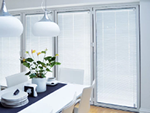
Blinds and external protections: an essential complement
Installing roller shutters, adjustable sunshades, or external blinds prevents direct radiation from reaching the glass. These protections significantly improve thermal comfort without modifying the windows themselves.
Maintenance and use: how to use glazing properly in summer
Closing shutters or blinds during the hottest hours and ventilating early in the morning or evening optimizes the role of glazing. Proper use of openings helps cool the home naturally, without additional equipment.
The role of glazing in regulating a building’s temperature
While roofs and walls are major sources of energy loss, glazing also plays a key role in a building’s thermal comfort. Properly chosen, it allows a house to cool naturally without air conditioning.
Glazing, a key element of the thermal envelope
Windows are part of the home’s thermal envelope. High-performance glazing limits heat exchange with the outside, preventing overheating in summer. Double or triple glazing, solar control glass, or protective films: several solutions can improve insulation and reduce heat entry.
How does heat enter through windows?
Heat enters mainly through solar radiation passing through the glass. If the solar factor of the glass is too high or the orientation is poorly adapted (south or west exposure without protection), indoor temperatures rise quickly. Adapting glazing to the orientation keeps rooms naturally cool.
Glazing and solar radiation: understanding the basics
Modern glazing can filter part of the sun’s rays while allowing light to pass through. Solar control glass, reflective or absorbing treatments, sunshades: these solutions limit heat gain and help cool the house without air conditioning, while preserving visual comfort.
Glazing remains a key solution to reduce summer heat without consuming energy.
What to remember
✔ High-performance glazing limits heat entry
✔ External protections reinforce thermal efficiency
✔ Proper daily use optimizes summer comfort
Toward a more efficient and comfortable building
By combining high-performance glazing, solar protections, and good usage practices, it is possible to achieve a cooler home in summer without resorting to air conditioning, for a durable and energy-efficient living space.