

Choosing your kitchen backsplash is a key step in interior decoration that often marks the end of renovation work. It’s the details that make all the difference, adding a modern touch to a home. However, to make the right choice for your kitchen backsplash, you need to ask yourself several questions. Because yes, there are countless possibilities that can impact the overall look of the kitchen and the durability of the product.
Why choose a glass backsplash for your kitchen?
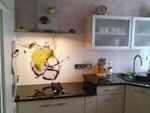
The glass backsplash has become a modern, practical, and durable choice to cover the wall between the countertop and the upper cabinets. Unlike tile or stainless steel, glass provides a smooth, glossy, joint-free finish that instantly creates a clean and bright impression.
But it’s not just a matter of style: choosing a glass backsplash also means opting for a material that is resistant to heat and humidity, and easy to maintain daily. Whether you prefer contemporary kitchens or want to enhance a more classic one, glass adapts to all styles.
How does glass improve your kitchen’s aesthetics?
A glass kitchen backsplash instantly transforms the atmosphere of a space. Thanks to its glossy or satin surface, glass captures and reflects light, visually enlarging the room — a valuable advantage in small kitchens.
Infinitely customizable, glass can be lacquered in bright, neutral, or pastel shades, printed with decorative visuals, custom patterns, or even left transparent to reveal a brick wall or painted surface. It blends seamlessly into any design project: from chic minimalism with authentic wood kitchens to an industrial style with lacquered cabinets.
It’s a true centerpiece that gives character to your kitchen while remaining timeless.
Practical advantages of a glass backsplash
Beyond aesthetics, the glass backsplash is a very functional solution. Its non-porous surface prevents grease, water, or food stains from seeping in. A simple wipe with a sponge is enough to restore its shine — no more dirty tile joints!
Another advantage: glass used for backsplashes is generally tempered glass, resistant to heat, which makes it safe to install behind a cooktop without risk of cracking or breaking.
Finally, installing a custom-made glass backsplash is quick and clean, ideal for both renovations and new kitchens.
Choosing the right type of glass for your backsplash
Now that we agree glass is an ideal material for a backsplash — aesthetic, resistant, easy to maintain, and bright — one essential question remains: which type of glass should you choose to ensure a flawless result and long-lasting durability?
Different types of glass: tempered, extra-clear…
Not all glass is created equal, especially when it comes to meeting the demands of a kitchen or bathroom. Here are the main options:
– Tempered glass: safety first. Tempered glass is heat-treated to withstand mechanical and thermal shocks. If it breaks, it shatters into small, blunt pieces, making it the ultimate safety glass. It’s the #1 choice for a backsplash near a cooktop or exposed to temperature changes.
– Extra-clear glass: for a premium look. Extra-clear glass contains very little iron oxide, giving it maximum transparency and eliminating the green tint visible on standard glass edges. Perfect for light lacquers or accurate printed designs.
Customization and design options
Once you’ve chosen the type of glass, how about personalizing it? Graphic or floral patterns, marble-effect or cement-tile look… everything is possible with digital printing. You can play with textures, colors, and patterns for the perfect creation.
If you prefer a minimalist style, you can choose lacquered glass and find the exact color that perfectly matches your cabinets.
How to install a glass backsplash in your kitchen?
Installing a glass backsplash isn’t too complicated, as long as you prepare properly. Whether you go through a professional or not, the right steps make all the difference for a durable and aesthetic result.
Preparation steps
– Take precise measurements: width, height, outlet placements.
– Make sure the wall is clean, smooth, and dry.
– Choose the right glass: tempered (heat-resistant), lacquered, or printed depending on the desired look.
Two installation techniques
1) Direct bonding (the most common). Special glass adhesive or double-sided tape. Apply, position with a level, press, let dry. — Invisible, quick, effective.
2) Mounting with spacers or rails. Supports screwed to the wall, glass held mechanically. — Removable, design look.
Maintaining your glass backsplash
Hire a certified professional (RGE, for example) to ensure installation meets waterproofing standards. Make sure joinery is well integrated into the home’s insulation envelope.
Use suitable cleaning products: avoid abrasive cleaners, sealants, or expanding foams.
Glass is hygienic, durable, and joint-free. A simple sponge wipe is enough!
Our tips:
– Soft sponge + warm water + dish soap.
– Use a squeegee or microfiber to prevent streaks.
– White vinegar for grease stains.
– ❌ Avoid abrasive products.
Unsure or need advice for your glass backsplash? We’re here to help!