Insulation

Protection
Comfort

Customization
What is sandblasted glazing ?
Whether for an interior project or a glazed façade, VIT SAND sandblasted glass adapts to all your needs. It can be applied to all types of glazing, except for soft-coated glass, and in any desired thickness.
What are the advantages of sandblasted glazing ?
Technical characteristics of sandblasted glazing
We cut a stencil of the desired pattern, and this stencil is applied to the glass before proceeding with the sandblasting.
o Full : Creates an opaque effect similar to frosted glazing but with a whiter tint.
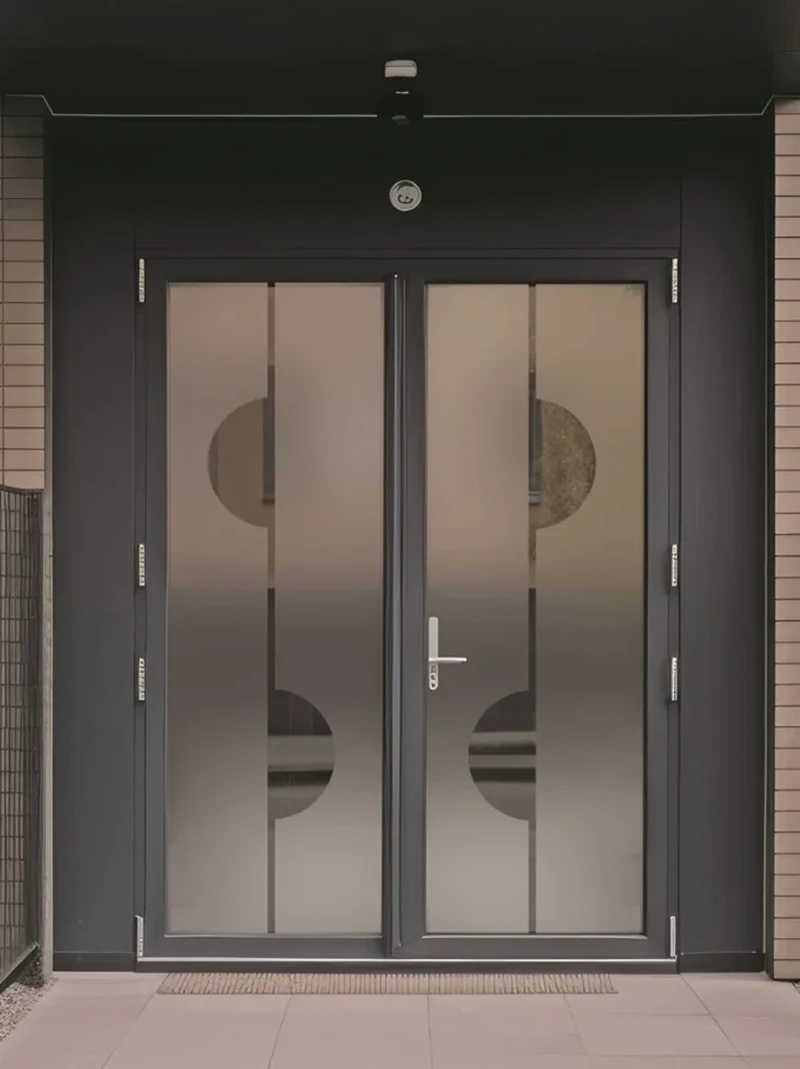
o Gradient : The sandblasting gradually becomes lighter, ideal for partitions that hide certain areas while allowing some visibility.
o Partial : Sandblasted and non-sandblasted areas on the same glazing, perfect for lettering, patterns, or logos.
For sandblasted glazing, a simple cleaning product is sufficient. For single glazing, we recommend applying a protective varnish to prevent dirt and fingerprints.
The sandblasting process :
The art of customizing your glass
It all starts with choosing the pattern you want to apply to your glazing. Whether it’s a logo, an illustration, or a simple texture, the pattern is cut with great precision using a stencil. This stencil then serves as the base for the sandblasting.
Once the pattern is created, it is carefully placed on the glass. The sandblasting then only affects the areas not covered by the stencil, thus keeping the covered parts perfectly transparent.
The glass is then placed in a sandblasting machine, where a stream of sand is projected onto the exposed areas. This process makes the glass surface opaque while leaving clean edges and a uniform finish. This is where the pattern begins to take shape before your eyes.
After sandblasting, the glass is gently blown to remove excess sand. If you want a satin effect, a varnish is applied to provide a smooth finish and protect the surface from fingerprints and dirt.
In the case of insulating sandblasted glazing, the sandblasted side is placed inside the glazing, within the air gap. This arrangement protects the sandblasting by trapping it in the air space, combining the decorative aspect of sandblasting with the insulation benefits of double glazing.
What are the uses of sandblasted glazing ?
Private spaces
Offices and workspaces
Facades
Compatibility
Anti-reflective
Fire-resistant
Fire protection
Anti-limescale shower
Glass shower
Window guardrail
Glass guardrail
Digital printing
Bulletproof
Reflective
Decorative laminated glass
Printed glass
Lacquered glass
Tempered glass
Low-emissivity
Interested in sandblasted glass ?
FAQ – Frequently asked questions about sandblasted glazing
What type of glass can be sandblasted ?
Can I customize any pattern on sandblasted glazing ?
How do I maintain sandblasted glazing ?
Does sandblasting reduce brightness ?
What is the difference between full, gradient, and partial sandblasting ?
• Gradient: Sandblasting gradually becomes lighter for a smooth transition effect.
• Partial: Some areas are sandblasted while others remain transparent, allowing for patterns or lettering.