Insulation

Protection

Comfort

Customization

What is vacuum glass ?
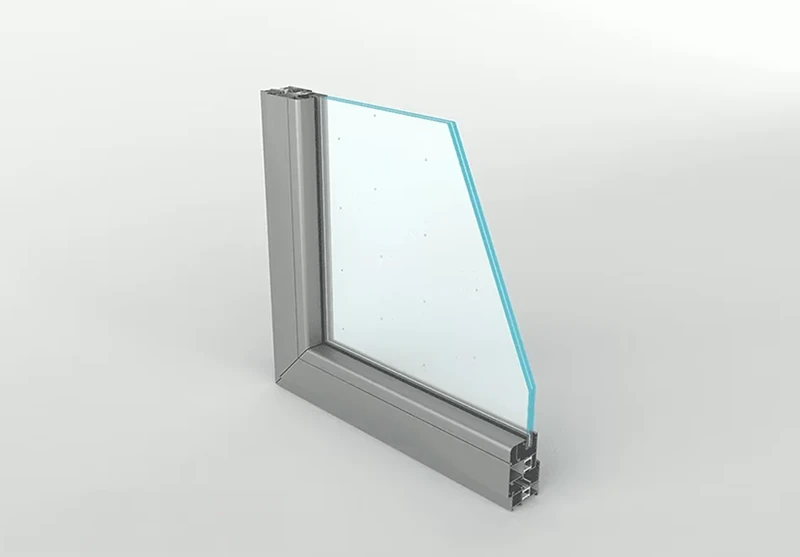
Vacuum glazing represents a major technological advance in the field of glazing. This type of glazing, consisting of two glass panes separated by an extremely narrow space, uses an innovative technique that creates a vacuum between the panes. This technology offers exceptional thermal and acoustic performance while remaining extremely light and thin. Vacuum glazing is ideal for applications where insulation is paramount, while maintaining a modern and refined aesthetic.
Vacuum glazing is used in numerous applications, ranging from high-performance windows to curtain walls and other glass façades, particularly in the construction, renovation and architecture sectors. This revolutionary glazing meets the most stringent energy efficiency standards while offering undeniable aesthetic advantages.
What are the advantages of vacuum glazing ?
in many fields, particularly construction and architecture.
Ug=0,4 W/m²K
Technical characteristics of vacuum glass ?
The glazing consists of two sheets of ultra-resistant glass, with an air or gas gap, sealed together.
A very low thermal transmittance coefficient (U-value), which helps retain heat in winter and insulate against heat in summer.
Une réduction significative du bruit, rendant ce vitrage idéal pour les bâtiments situés dans des environnements bruyants.
Vacuum glazing is thinner than conventional glazing solutions while maintaining the same performance, with a thickness that can vary depending on the project requirements.
Thanks to its vacuum sealing technology, this glazing is highly durable and resistant to temperature variations and humidity.
Performance
| AV ELIA | Total thickness (mm) | EN 410 | EN 673 Ug (W/m²K) |
|||
|---|---|---|---|---|---|---|
| TL (%) | RL ext | RL int | g | |||
| 4T Low E (0.3) 4T | 8.3 | 80 | 13 | 12 | 0.58 | 0.45 – 0.5 (depending on the make-up) |
| 5T Low E (0.3) 5T | 10.3 | 79 | 13 | 12 | 0.58 | |
| 6T Low E (0.3) 6T | 12.3 | 78 | 13 | 12 | 0.58 | |
Acoustics
| AV ELIA | Total thickness (mm) | Rw (C; Ctr) dB |
|---|---|---|
| 4T Low E (0.3) 4T | 8.3 | 36 (-2;-3) |
| 5T Low E (0.3) 5T | 10.3 | 38 (-2;-3) |
| 6T Low E (0.3) 6T | 12.3 | 38 (-2;-3) |
Why choose vacuum glazing ?
Whether you are an architect, builder, or building owner, this type of glazing can meet a wide range of needs.
Optimize your energy efficiency and enhance the comfort of your spaces with this innovative technology. Whether for renovation projects or new constructions, vacuum glazing is an effective and durable solution for a greener and quieter future.
Applications
Windows
Discover
Veranda
and glass roof
Facade
DiscoverRefurbishment
DiscoverCompatibility
Low emissivity
Solar control
Ready to improve the insulation of your project
with vacuum glazing ?
Our experts are here to guide you in choosing the solution that best suits your needs.
FAQ – Your frequently asked questions about vacuum glass
What is vacuum glazing ?
What are the advantages of vacuum glazing ?
It is also more resistant and durable.